
Sustainability
INTERNET OF THINGS (IoT)
Garment Manufacturing with IoT: Smart Monitoring and Real-Time Resource Management
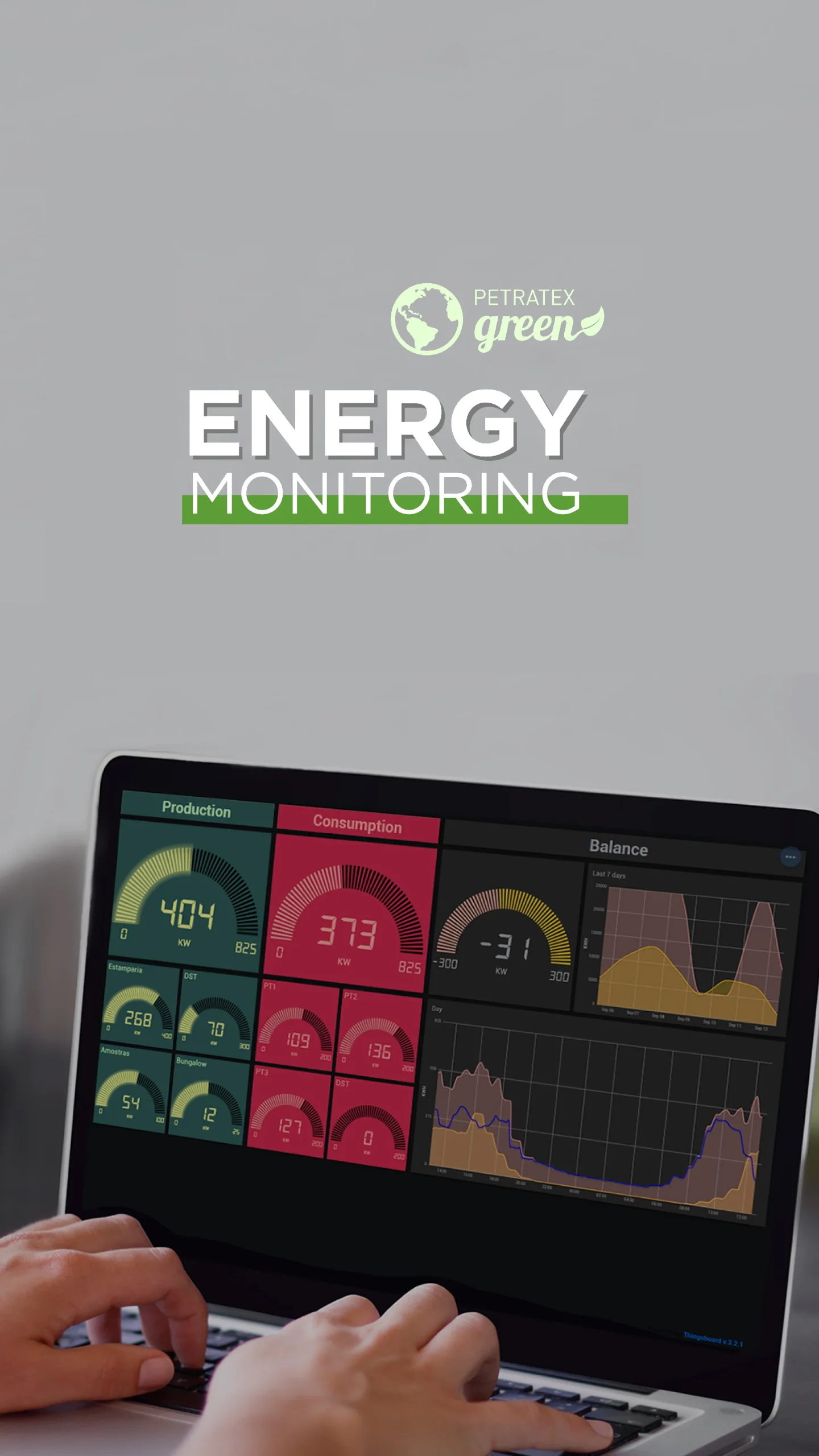
We have implemented a network of smart meters and IoT (Internet of Things) sensors across our production lines, enabling real-time monitoring of resource and utility consumption.
The collected data is consolidated into a centralised dashboard, with continuous updates, allowing us to monitor consumption, analyse equipment performance and identify potential anomalies in production processes.
Key benefits:
- Immediate access to environmental and consumption data;
- Greater accuracy in monitoring and in the sustainability indicators reported to B2B customers;
- Early identification of abnormal consumption patterns and irregular operating conditions;
- Reduced resource waste and lower risk of production interruptions.

Industrial IoT Applications in Garment Manufacturing and the Textile Industry
Smart Energy Management and Resource Optimisation
Automatic machine standby systems: Allow machines to be remotely switched to standby mode or turned off during periods of inactivity, avoiding unnecessary energy consumption when equipment is not in use.
Variable Frequency Drives (VFDs): Enable motor speed and operating parameters to be adjusted according to actual operational requirements. Beyond simply switching equipment on or off, they allow motor operation to be regulated, for example, to 50% of its capacity, avoiding the energy consumption associated with operating above actual requirements.
Automated lighting control: Light sensors automatically adjust lighting levels in production areas according to the amount of available natural light, optimising electricity consumption.
Predictive Maintenance and Equipment and Utility Monitoring
Continuous temperature monitoring: Temperature sensors are installed on sewing machine motors and other industrial equipment, enabling abnormal temperature increases to be identified and maintenance or cleaning requirements to be anticipated, helping prevent breakdowns and unexpected downtime.
Smart utility monitoring: Real-time monitoring of water supply networks, compressed air systems and pressure levels. The detection of abnormal conditions, such as supply failures, pressure drops or leaks, enables timely intervention, preventing resource losses and disruptions to production operations.
Smart Management of Infrastructure and Auxiliary Systems
Automated irrigation control: Sensors and software are used to manage irrigation systems in green areas and outdoor spaces, adjusting operation according to water requirements and avoiding unnecessary consumption.
Electric vehicle charging point management: Charging stations are controlled through software, allowing their operation to be managed and their energy consumption to be monitored, contributing to the company's overall energy consumption monitoring.